VA Priority Groups Explained: What Each Group Pays and Gets (2026)
Your VA priority group (1-8) sets your wait times, copays, and access. What each means, why veterans get misclassified, and how to check which one you're in.
The VA sorts enrolled veterans into 8 priority groups that determine copays, scheduling priority, and access, with Group 1 (50%+ disabled, TDIU, or Medal of Honor) the highest and Group 8 (higher income, no service connection) the lowest. Your group is based on service-connected disability rating, income, service exposures, and special status like Purple Heart or POW; many veterans are misclassified and can move up by updating their rating, income (Form 10-10EZR), or documented exposure with VA enrollment.
When a veteran enrolls in VA healthcare, they're assigned a priority group from 1 to 8. The group determines how quickly they get scheduled, what (if anything) they owe in copays, and which programs they have access to. It also determines whether the VA is required to enroll them at all when capacity is tight.
Most veterans don't know what group they're in. Many are in the wrong group. Family members who understand priority groups can sometimes save their veteran significant money and get them better-prioritized care.
This is what each group means, why misclassification is so common, and how to fix it.
How priority groups work
The VA enrolls eligible veterans in healthcare and assigns each one to a priority group based on:
- Service-connected disability rating
- Income relative to thresholds
- Specific service exposures (Agent Orange, Camp Lejeune, burn pits, Vietnam, Gulf War)
- Specific service events (Purple Heart, POW)
- Recently separated status (5-year window)
- Medicaid eligibility
- Special status (Catastrophic disability, Aid & Attendance)
The lower the number, the higher the priority, Group 1 has the highest priority, Group 8 has the lowest.
Higher priority means:
- No or low copays
- Priority access during high-demand periods
- Access to all available care
- Enrollment guarantee even when the VA limits new enrollments (which happens in groups 7-8 sometimes)
Lower priority can mean:
- Higher copays
- Lower scheduling priority
- Limited or no enrollment depending on VA capacity at that time
The eight groups
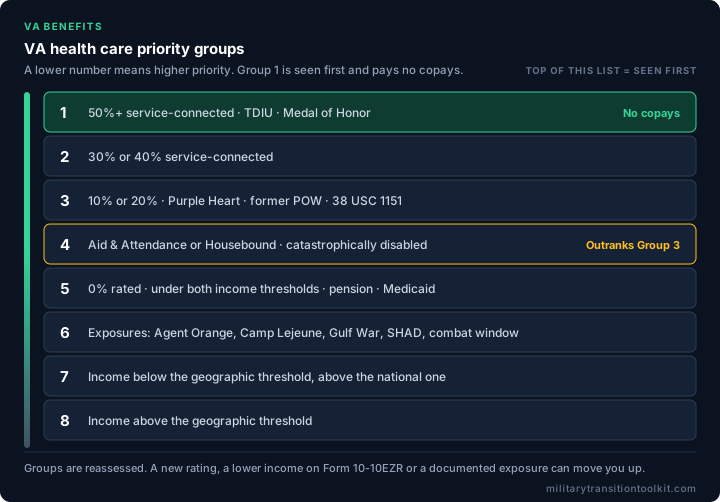
Priority Group 1
The highest priority. Veterans who are:
- 50% or more service-connected disabled
- Unemployable due to service-connected disability (TDIU rated)
- Awarded the Medal of Honor
Group 1 veterans pay no copays for care. They get priority scheduling.
Priority Group 2
- 30% or 40% service-connected disabled
No copays. High priority.
Priority Group 3
- 10% or 20% service-connected disabled
- Awarded the Purple Heart
- Discharged for a disability incurred or aggravated in line of duty
- Former Prisoners of War
- Awarded benefits under 38 U.S.C. §1151 (for an additional disability caused by VA hospital care, medical or surgical treatment, or vocational rehabilitation)
Group 3 veterans generally pay no copays for service-connected conditions. May have copays for non-service-connected care.
Priority Group 4
- Receiving VA Aid & Attendance or Housebound benefits
- Catastrophically disabled (a separate VA determination, not the same as 100% rating)
Group 4 has very high priority despite the higher number. Catastrophic-disability classification is VA-specific and worth pursuing for veterans with very high care needs.
Priority Group 5
- 0% service-connected disabled (rated, but at 0%)
- Below the VA national income threshold AND below the geographically-adjusted threshold for their area
- Receiving VA pension benefits
- Eligible for Medicaid
This is the largest group for many regions. No copays for service-connected care. Some copays for non-service-connected.
Priority Group 6
- Specific service exposures: World War II veterans, Persian Gulf War veterans, Vietnam veterans (Agent Orange), Camp Lejeune contaminated water, post-9/11 veterans within their 10-year free care window for combat veterans
- Project 112/SHAD participants
- Compensation seekers (filing claims, awaiting determination)
- 0% disability rated who don't fit Group 5
Group 6 has historical and exposure-related entries. Many veterans don't know they qualify for Group 6 based on where and when they served.
Priority Group 7
- Income below the geographic threshold for their area, but above the national income threshold
Veterans in this group can be subject to copays. Enrollment is currently open but not guaranteed during VA capacity constraints.
Priority Group 8
- Income above the geographic threshold
Some Group 8 enrollment subcategories have been closed or limited at various points. Currently, Group 8 enrollment is open with copays.
Why so many veterans are in the wrong group
Several patterns:
1. They enrolled before their disability rating was finalized
A veteran who enrolled at Group 8 when they had no rating, then got a 30% rating six months later, is supposed to move to Group 2. But the VA doesn't automatically reclassify. The veteran (or family) must update.
2. They have a service exposure that wasn't documented at enrollment
Vietnam-era Agent Orange exposure, Gulf War, Camp Lejeune, burn pit exposures, all have made some veterans eligible for Group 6 retroactively. The PACT Act of 2022 specifically expanded burn pit and other toxic exposure presumptions, moving some veterans up.
If your veteran served in any of these contexts, they may be eligible for Group 6 placement that they don't have.
3. Income changed but VA wasn't notified
Income for Group 5 is means-tested annually. A veteran whose income drops (due to retirement, disability, or job loss) may now qualify for Group 5 even though they were placed in Group 7 or 8 originally.
4. They got a Purple Heart they hadn't recorded
Some veterans don't realize a Purple Heart immediately puts them in Group 3 regardless of disability rating.
5. They were medically discharged
Free tool for this exact situation
VA claims, resume builder, MOS translator, career planner — all free.
Veterans medically discharged are usually entitled to Group 3 placement under "discharged for a disability incurred or aggravated in line of duty." Many aren't aware.
6. They were a POW
Even brief POW status (former captives in any conflict) places the veteran in Group 3.
7. They served in the 5-year combat veteran window
Combat veterans who served on active duty in a theater of combat operations after November 11, 1998 receive an automatic 5 years (10 years for some recent eras) of free VA healthcare regardless of priority group, plus enhanced enrollment opportunities. Many have aged out of this window without using it.
How to check your veteran's group
Veterans can check their priority group:
- On va.gov by logging in and looking at their healthcare status
- By calling 1-877-222-VETS (8387) (VA Health Benefits Information)
- At any VA medical center enrollment office
- On their VA enrollment letter (received when they enrolled)
If you're family helping check, the veteran has to give you access, VA can't share details with you directly without a release.
How to change priority groups
If your veteran qualifies for a higher priority group than they're in:
Income-based change
If their income has dropped, they can request reassessment. VA Form 10-10EZR is the income/financial update form. Once they file it with current income documentation, the VA reassesses and updates the group.
Disability-rating change
When a new VA disability rating is granted, the veteran should ensure their healthcare priority group is updated. Sometimes this happens automatically; sometimes it doesn't. Check.
Service exposure-based change
If your veteran served in a setting that should qualify for Group 6 (Vietnam, Camp Lejeune, Gulf War, burn pits) and they're not currently in Group 6, contact the VA enrollment office and request reassessment. Documentation may include DD-214 references to deployments, campaign medals, or other service records.
Purple Heart, POW, medical discharge
If the DD-214 shows any of these and the veteran is below Group 3, this is an obvious update. Contact VA enrollment.
What changing groups affects
A move up in priority groups can change:
- Copays: Drop to zero for many services
- Scheduling priority: Better access during high-demand periods
- Beneficiary travel: Eligibility for travel reimbursement (Group 1, sometimes lower)
- Long-term care eligibility: Different rules at different groups
- Compact Act eligibility: Group eligibility doesn't change Compact Act access (which is universal for emergency mental health), but other care pathways may shift
For a veteran who has been paying VA copays for years, being correctly placed in Groups 1-3 saves real money, sometimes thousands per year.
What about veterans who never enrolled?
Many veterans never enrolled in VA healthcare, often because they assumed they didn't qualify or didn't need it. As of recent expansions:
- Combat veterans of any era have a 5-10 year automatic eligibility window post-separation, regardless of disability or income
- PACT Act expansion opens eligibility to many more veterans with toxic exposure history
- Group 6 / Group 7 / Group 8 veterans CAN enroll (with copays for some), so even higher-income veterans without service-connected conditions can use VA care
If your veteran never enrolled, it's worth doing. Enrollment doesn't obligate them to use VA care, it just establishes their eligibility for when they need it.
Apply: VA Form 10-10EZ at va.gov, by phone at 1-877-222-VETS, or in person at any VA medical center.
What family can do
If you're family of a veteran:
- Find out what priority group they're in. They likely don't know.
- Check whether they're in the right group. Use the criteria above. Most veterans are in the right group, but a meaningful minority aren't.
- If they're under-rated: Help them understand whether a claim review or supplemental claim makes sense. Our VA benefits by rating breakdown shows what each percentage unlocks.
- If they qualify for a higher group based on facts already on the record (Purple Heart, medical discharge, POW, certain exposures): Help them contact the VA enrollment office to update.
- If income has changed: Help them file Form 10-10EZR.
- If they never enrolled: Help them enroll. They may be eligible for care they've been paying out of pocket for.
The biggest leverage is generally:
- Confirming current rating is reflected
- Documenting service exposure for Group 6 placement
- Updating income for Group 5 placement
- Confirming Purple Heart / POW / medical discharge status
Frequently Asked Questions
What are the VA priority groups?
The VA assigns enrolled veterans to one of 8 priority groups, from Group 1 (highest priority) to Group 8 (lowest). The group determines your copays, how quickly you get scheduled, and what programs you can access.
Which priority group is best?
Group 1 has the highest priority. It includes veterans rated 50% or more service-connected disabled, those rated totally disabled due to individual unemployability (TDIU), and Medal of Honor recipients. Group 1 veterans pay no copays and get priority scheduling.
Does a Purple Heart change my priority group?
Yes. A Purple Heart automatically places a veteran in Priority Group 3 regardless of disability rating. Many veterans don't realize this and stay in a lower group.
How do I change my VA priority group?
If your income dropped, file VA Form 10-10EZR with current documentation. For a new disability rating, Purple Heart, POW status, medical discharge, or qualifying service exposure (Vietnam, Camp Lejeune, Gulf War, burn pits), contact the VA enrollment office and request reassessment.
How do I find out which priority group I'm in?
Log in at VA.gov and check your healthcare status, call VA Health Benefits Information at 1-877-222-VETS (8387), visit any VA medical center enrollment office, or look at your VA enrollment letter.
What to remember
Priority groups quietly shape every aspect of a veteran's experience with VA healthcare. The system is rule-based and doesn't aggressively self-correct, many veterans stay misclassified for years. Family members who understand the rules can sometimes get their veteran moved to a higher-priority group with significant practical benefits.
If you're family of a veteran using VA care and you don't know their priority group, the next call worth making is the one to find out.
VA Health Benefits Information: 1-877-222-VETS (8387). Update form: VA Form 10-10EZR.
Sources: VA health care priority groups, VA disability compensation.
Know your group: See the VA priority groups guide to find which group you fall into and what it covers.
Military Transition Toolkit — free
Free tools for your military transition
MOS / AFSC Translator
Convert your military role to civilian job titles and salary data
Military Resume Builder
Translate military experience into language civilian employers understand
VA Combined Rating Calculator
Calculate your combined VA rating the same way VA does
All tools are 100% free. Create a free account to access account tools.
Related articles
Holidays, Deployment Anniversaries, and KIA Dates: The Calendar of Hard Days
There are predictable hard days in a veteran's year. Knowing the calendar in advance lets family show up the right way before the wave hits, instead of reacting after.
Family SupportHow to Support a Service Member's Transition: A Family Guide
For parents, adult children, siblings, and family members of separating service members. What to do at each stage of the transition timeline, how to bring up VA claims without nagging, and the emotional realities to expect.
Family SupportPTSD vs. Moral Injury vs. Survivor's Guilt: Why 'Talk to Someone' Lands Wrong
Three different things that look similar from the outside and need very different responses. What family should know about each, why the wrong framing makes it worse, and what to say instead.