Federal Pay Scales 2026: GS, WG & SES Salaries for Veterans
What GS, WG, and SES jobs pay in 2026 including locality pay, and where your military experience lands you on the federal scale.
Federal pay is confusing. GS-12 Step 5, locality pay, within-grade increases, quality step increases, it sounds like a foreign language.
Just want the numbers? The 2026 GS pay chart has the complete General Schedule pay tables — every grade from GS-1 to GS-15 across all ten steps, plus all 58 locality pay areas. This guide explains what those numbers mean and where military experience lands you.
But here's the truth: once you understand how federal pay works, you can strategically target positions that maximize your earning potential. And as a veteran, you have options for coming in at higher grades and steps than typical applicants.
This guide breaks down every federal pay system you'll encounter, shows you exactly what each grade earns, and teaches you how to negotiate the best starting salary.
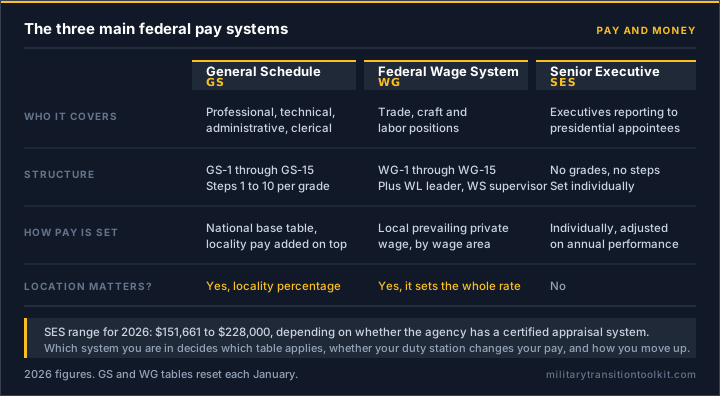
The Three Main Federal Pay Systems
Looking for a specific number rather than the comparison? Go straight to it:
| If you want | Go here |
|---|---|
| GS salary by grade, step and locality | GS pay hub · GS pay calculator |
| Wage Grade (WG) hourly rate for your wage area | WG pay hub · WG pay calculator |
| SES pay range and how it is set | SES pay |
Most-looked-up individually: GS-13 and GS-14, and for locality, Washington-Baltimore-Arlington and Wage Grade in Virginia Beach.
The rest of this page explains how the three systems differ and which one your experience lands you in.
1. General Schedule (GS)
The most common federal pay system, covering about 1.5 million employees. Used for professional, technical, administrative, and clerical positions.
Grades: GS-1 through GS-15 Steps: 1 through 10 within each grade Locality pay: Added on top of base pay (varies by location)
2. Federal Wage System (WG)
For trade, craft, and labor positions. Pay is based on local prevailing wages for similar private-sector jobs.
Grades: WG-1 through WG-15 Also includes: WL (Leader) and WS (Supervisor) levels Pay varies: Significantly by geographic location
3. Senior Executive Service (SES)
For top-level executives who report to presidential appointees. These are leadership positions across all agencies.
Pay range: Currently $151,661 to $228,000 (2026) No steps: Pay is set individually Performance-based: Annual adjustments based on performance
General Schedule (GS) Pay in Detail
2026 GS Base Pay Scale
Steps 1, 5 and 10 are shown below for readability. The complete GS pay chart lists all ten steps for every grade.
| Grade | Step 1 | Step 5 | Step 10 |
|---|---|---|---|
| GS-1 | $22,584 | $25,589 | $28,248 |
| GS-2 | $25,393 | $27,858 | $31,953 |
| GS-3 | $27,708 | $31,404 | $36,024 |
| GS-4 | $31,103 | $35,251 | $40,436 |
| GS-5 | $34,799 | $39,439 | $45,239 |
| GS-6 | $38,791 | $43,963 | $50,428 |
| GS-7 | $43,106 | $48,854 | $56,039 |
| GS-8 | $47,738 | $54,102 | $62,057 |
| GS-9 | $52,727 | $59,759 | $68,549 |
| GS-10 | $58,064 | $65,804 | $75,479 |
| GS-11 | $63,795 | $72,303 | $82,938 |
| GS-12 | $76,463 | $86,659 | $99,404 |
| GS-13 | $90,925 | $103,049 | $118,204 |
| GS-14 | $107,446 | $121,774 | $139,684 |
| GS-15 | $126,384 | $143,236 | $164,301 |
Important: These are BASE salaries. Add locality pay for your actual salary. To see what a specific grade and step pays in your city, see the full 2026 GS pay chart — all ten steps for every grade, plus your locality area — or run the numbers through the GS pay calculator.
Locality Pay: The Real Game Changer
Federal employees get additional locality pay based on where they work. This can add 17% to 33%+ to your base salary.
2026 Locality Pay Rates (examples):
| Location | Locality % | GS-12 Step 5 Total |
|---|---|---|
| Rest of US (base) | 17.06% | $101,443 |
| Atlanta | 23.79% | $107,275 |
| Boston | 32.58% | $114,893 |
| Chicago | 30.86% | $113,402 |
| Dallas-Fort Worth | 27.26% | $110,282 |
| Denver | 30.52% | $113,107 |
| Houston | 35.00% | $116,990 |
| Los Angeles | 36.47% | $118,264 |
| New York | 37.95% | $119,546 |
| San Diego | 33.72% | $115,880 |
| San Francisco | 46.34% | $126,817 |
| Seattle | 31.57% | $114,017 |
| Washington DC | 33.94% | $116,071 |
San Francisco GS-12 Step 5: $126,817 Rest of US GS-12 Step 5: $101,443 Difference: $25,374
Location matters. A lot.
Understanding Steps and Within-Grade Increases
Each GS grade has 10 steps. You advance through steps based on time and satisfactory performance:
- Steps 1-3: 1 year at each step (3 years total)
- Steps 4-6: 2 years at each step (6 years total)
- Steps 7-9: 3 years at each step (9 years total)
- Step 10: Terminal step
Example progression at GS-12 (DC locality):
- Year 1: Step 1 = $102,415
- Year 2: Step 2 = $105,829
- Year 3: Step 3 = $109,243
- Year 5: Step 4 = $112,657
- Year 7: Step 5 = $116,071
- Year 9: Step 6 = $119,486
- Year 12: Step 7 = $122,899
- Year 15: Step 8 = $126,313
- Year 18: Step 9 = $129,728
- Year 18+: Step 10 = $133,142
Quality Step Increases (QSI)
Exceptional performance can earn you an extra step increase (beyond normal progression). QSIs are competitive, only top performers receive them.
Grade Increases and Career Ladders
Many federal positions are "career ladder" positions, meaning you're hired at a lower grade with promotion potential.
Example: A position listed as GS-7/9/11 means:
- You start at GS-7
- After 1 year (with satisfactory performance), promote to GS-9
- After another year, promote to GS-11
- GS-11 is your "full performance level"
Career ladders are powerful: You get guaranteed promotions without competing, often with 2-grade increases.
Some common career ladder positions:
- GS-5/7/9 – Many entry-level professional positions
- GS-7/9/11 – Specialist and analyst positions
- GS-9/11/12 – Journey-level professional positions
- GS-12/13 – Senior specialist positions
Your GS number: the GS pay calculator applies your locality to every grade and step, and the GS pay hub breaks it out by grade and by locality area.
What Your Military Service Qualifies You For
Veterans often ask: "What GS level should I target?"
Here's a rough translation based on military rank:
| Military Rank | Typical GS Equivalent |
|---|---|
| E-1 to E-3 | GS-2 to GS-4 |
| E-4 to E-5 | GS-4 to GS-7 |
| E-6 to E-7 | GS-7 to GS-11 |
| E-8 to E-9 | GS-11 to GS-13 |
| O-1 to O-2 | GS-7 to GS-11 |
| O-3 | GS-11 to GS-12 |
| O-4 | GS-12 to GS-13 |
| O-5 | GS-13 to GS-14 |
| O-6 | GS-14 to GS-15 |
| O-7+ | SES |
Important: These are rough equivalents. Your actual qualification depends on:
- Specific skills and experience
- Education level
- How well your experience matches the job
- Competition for the position
Federal Wage System (WG) Pay
The Wage Grade system pays blue-collar workers based on prevailing private-sector wages in their area. Rates vary widely by wage area, so check our WG pay by wage area hub for your location.
Looking for your exact WG rate? Use the WG Pay Scale Calculator for 2026 hourly pay by wage area, grade, and step. The section below explains how the system works; the calculator gives you the number.
WG Structure
Levels:
- WG – Non-supervisory
- WL – Leader (works and leads others)
- WS – Supervisor
Grades: 1-15 (like GS), but pay varies dramatically by location
Sample WG Pay (varies by location)
| Grade | Typical Starting | Typical Top Step |
|---|---|---|
| WG-5 | $18-22/hour | $22-26/hour |
| WG-8 | $22-28/hour | $28-34/hour |
| WG-10 | $26-34/hour | $33-42/hour |
| WG-12 | $30-40/hour | $38-50/hour |
WG Jobs Common for Veterans
- Aircraft mechanic (WG-10 to WG-12)
- Electronics technician (WG-10 to WG-11)
- Heavy equipment operator (WG-8 to WG-10)
- HVAC technician (WG-9 to WG-10)
- Vehicle mechanic (WG-8 to WG-10)
- Warehouse worker (WG-5 to WG-7)
- Electrician (WG-10 to WG-11)
- Machinist (WG-10 to WG-11)
Key advantage: WG jobs often have no education requirements, your military technical training counts.
Your WG number: WG rates are set per wage area, so a national table will not tell you what you earn. The WG pay calculator gives the hourly rate for your area and grade, and the WG pay hub lists every wage area and every grade.
Senior Executive Service (SES)
Free tool for this exact situation
Log USAJOBS applications, interviews, and follow-ups.
SES positions are executive leadership roles, think civilian flag officers.
SES Pay (2026)
| Level | Salary |
|---|---|
| Minimum | $151,661 |
| Maximum (agencies with certification) | $228,000 |
| Maximum (agencies without certification) | $209,600 |
SES receives no locality pay — the salary is identical in San Francisco and rural Alabama. That single detail means moving from a high-locality GS-15 into entry-level SES can be nearly a lateral move in take-home terms. Full breakdown, including the aggregate cap and the ECQ path: SES Pay Scale 2026.
Veteran Advantages for SES
Veterans have a significant presence in SES:
- Military leadership experience is highly valued
- Strategic planning and large-organization management translates well
- Security clearances often required
Path to SES
Typical path: GS-12 → GS-13 → GS-14 → GS-15 → SES
Most SES positions require:
- Executive Core Qualifications (ECQs)
- 15+ years of progressively responsible experience
- Advanced education (often Master's or higher)
- Demonstrated executive leadership
SES detail: the current range, how agencies set pay within it, and what a certified appraisal system changes are all on the SES pay page.
Special Pay Situations
Special Salary Rates
Some positions in high-demand fields get special salary rates above normal GS pay:
Common special rate positions:
- Information Technology (2210 series)
- Engineering
- Medical and healthcare
- Cybersecurity
- Scientific positions
A GS-12 IT Specialist might earn $95,000 base + locality, while a regular GS-12 earns $87,000 base + locality.
Law Enforcement Pay (LEO)
Law Enforcement Officers get:
- LEAP (Law Enforcement Availability Pay): 25% premium for being available for unscheduled duty
- Earlier retirement eligibility
- Enhanced retirement annuity calculation
Example: GS-13 Criminal Investigator with LEAP in DC:
- Base + locality: $133,964
- With LEAP (25%): $167,455
Administratively Uncontrollable Overtime (AUO)
Some positions qualify for 10-25% additional pay for unpredictable overtime demands.
Night and Weekend Differentials
- Night shift (6 PM - 6 AM): 10% differential
- Sunday work: 25% differential
How to Negotiate Your Starting Salary
Superior Qualifications and Special Needs Pay Setting
Agencies can set your pay above Step 1 if you have "superior qualifications" or the agency has a "special need" for your skills.
How to request:
- After receiving a job offer, request a higher step in writing
- Document your superior qualifications:
- Certifications
- Specialized experience
- Current salary (if higher)
- Competing job offers
- Agency must approve, but many do
Example request:
"Based on my 8 years of intelligence analysis experience, current TS/SCI clearance, and PMP certification, I request consideration for GS-12 Step 5 under the Superior Qualifications authority."
Matching Private Sector Salary
If you're taking a pay cut to join federal service, document your current salary. Agencies can often match higher steps to minimize your pay reduction.
Using Military Retirement Pay Strategically
Your military retirement pay is separate from federal salary, you can receive both.
A retired E-8 with $2,500/month military retirement taking a GS-12 Step 5 position in DC:
- Federal salary: $116,071/year
- Military retirement: $30,000/year
- Total: $146,071/year
Federal Benefits Beyond Salary
Federal compensation is more than just salary:
Retirement (FERS)
- Basic Benefit Plan: 1% of high-3 salary × years of service
- Thrift Savings Plan: 5% agency match (essentially free 5%)
- Social Security: Yes, federal employees are covered
Military Service Credit
You can "buy back" your military time to count toward federal retirement. The cost is 3% of your military base pay during those years, usually very worth it.
Example:
- 6 years military service
- Military base pay averaged $35,000/year
- Buyback cost: $35,000 × 6 × 3% = $6,300
- Result: Those 6 years count toward your FERS pension
Leave
- 13 days annual leave to start (increases to 26 days over time)
- 13 days sick leave (no limit on accumulation)
- 11 paid federal holidays
- Credit for military service: 4+ years of military = start at 19.5 days annual leave
Health Insurance (FEHB)
The Federal Employees Health Benefits program offers:
- 200+ plan options
- Government pays 72-75% of premiums
- Coverage continues into retirement
Life Insurance (FEGLI)
- Basic coverage: annual salary + $2,000 (government pays 1/3)
- Optional coverage available
- Can continue into retirement
Pay Calculators and Resources
OPM Resources
- GS Pay Calculator – Official pay tables
- Locality Pay Tables – Find your area
- FWS Pay Tables – Wage Grade rates
Third-Party Tools
- FederalPay.org – Easy-to-use calculators
- GovLoop – Federal career community
- FedSmith – Federal employee news and resources
Strategic Pay Decisions for Veterans
When to Accept Lower Starting Pay
- Career ladder position with quick advancement (GS-7 to GS-12 in 3 years)
- High-demand field with rapid promotion (cyber, contracting)
- Desire for stability over maximum pay
- Location has low cost of living but standard locality pay
When to Push for Higher Pay
- You're taking a significant pay cut from private sector
- You have in-demand certifications (PMP, CISSP, CPA)
- The position is hard to fill
- You have competing offers
Location Strategy
- Maximize total compensation: DC area has high locality pay AND many positions
- Maximize purchasing power: Low cost areas with "Rest of US" locality
- Balance: Cities like Denver, Atlanta, or Austin with moderate locality and reasonable cost
The Bottom Line
Federal pay might seem complicated, but the system is transparent, unlike private sector negotiation, you know exactly what every position pays.
Key takeaways:
- GS-11 to GS-13 is where most veterans with 4-10 years of service will qualify
- Locality pay adds 17-46% to your base salary, location matters
- Career ladder positions offer guaranteed promotions
- Military retirement plus federal salary is a powerful combination
- Negotiate for higher steps using Superior Qualifications authority
- Buy back your military time for your FERS pension
Understanding federal pay gives you the power to target the right positions and negotiate effectively.
Ready to find federal positions at your target grade? Check out our USAJOBS guide or explore agency-specific career guides.
Sources: USAJobs.gov, OPM Veterans Preference, VA Employment Center
Going federal? See the free federal jobs guide for how veterans’ preference and the GS pay scale actually work.
Military Transition Toolkit — free
Tools for landing a federal job
Military Resume Builder
Build a federal-formatted resume with your military experience
Job Search Tracker
Track USAJOBS applications, interviews, and follow-ups
All tools are 100% free. Create a free account to access account tools.
Related articles
The 4 Federal Merit Hiring Essay Questions (2026): What to Know Before You Answer
The four essay questions on GS-05+ federal job postings, what each is really asking, the 200-word limit, and the AI-certification trap under 18 U.S.C. 1001 that can turn a job application into a federal crime.
federal-employmentSES Pay Scale 2026: Senior Executive Service Salary Ranges
The 2026 SES pay scale: $151,661 minimum to $228,000 maximum in certified agencies, $209,600 without certification. Why SES gets no locality pay, and how veterans reach it.
federal-employmentVRA (Veterans Recruitment Appointment) Guide: Non-Competitive Federal Hiring
VRA lets agencies hire eligible veterans non-competitively up to GS-11. Who qualifies, how it converts to a permanent job, and exactly how to ask HR to use it.